



Introduction to the Issue of Overfishing and Neglected Fish
According to FAO reports, the percentage of assessed global stocks for which maximum sustainable fishing quantities have been reached or exceeded has now exceeded 84%. Only 12% of stocks are moderately exploited, a constantly decreasing share: in 1974 it was equal to 40%, in 2005 to 23%, in 2008 to 20%. After the increase in world production recorded between the 1950s and 1980s, fishing has experienced a stabilization phase, followed by the first signs of contraction. In the 2020 FAO Report, the overall production of fisheries and aquaculture was equal to 178 million tonnes of aquatic animals; in 2022, an all-time high of 214 million tonnes was reached, of which 87 came from aquaculture. Forecasts indicate further growth in demand: by 2030 total production is expected to be around 202 million tonnes.
Triggerfish, one of the many “forgotten” fish
Understanding Neglected Fish and Their Importance
Given these numbers, a structural datum affects: of the over 700 edible marine species, only about 10% are actually marketed. A factor that contributes to aggravating the overexploitation of some species, always the same. Reducing this pressure also means promoting more conscious consumption of fish resources capable of promoting the recovery of stocks. An awareness that also comes from the consumption of so-called fish “neglected” or “forgotten”. Treccani defines “neglected” as that which is overlooked, not taken into consideration. Applied to the sea, the term indicates a series of fish species – marine or freshwater – today little consumed, despite the fact that in the past they were common on tables and had excellent nutritional properties.
The Gastronomic and Environmental Value of Neglected Fish
The change in eating habits has progressively distanced these fish from daily consumption. Their low demand means that they are not always present in markets and fishmongers, but their use can contribute to more sustainable fishing, easing the pressure on the most sought-after species. Many of these species have tasty meat and are suitable for numerous culinary preparations, like their “family members” best known. The valorisation of neglected fish thus takes on a dual value: gastronomic and environmental. Furthermore, they are often fish at an affordable cost, capable of offering authentic flavors and which are not very popular today.
Aci Trezza: A Maritime History and Identity
A few kilometers from Catania, Aci Trezza rises (‘a Trizza in Sicilian), fraction of the municipality of Aci Castello, with the panorama dominated by the Cyclops stacks and the Lachea island. Founded at the end of the 17th century as a seaport for the principality of Riggio, the village soon became a vital center for local commercial life.
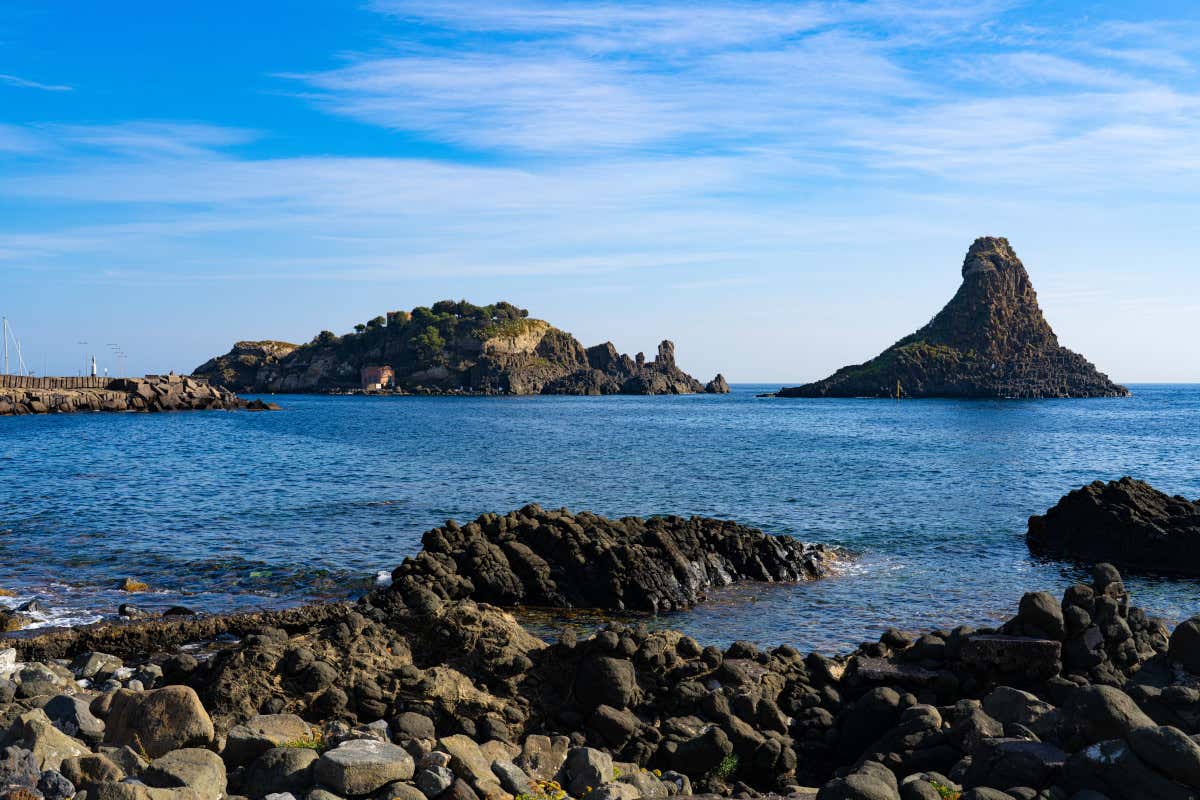
The view of the Cyclops stacks and Lachea island
Promoting Sustainable Fishing through “Ittiturismo Gente di Mare 1991”
The initiative of the fishermen’s cooperative of the Catania coast took shape around the village of Aci Trezza, with the aim of offering fishing tourism and hospitality services on land, in fishermen’s houses and seaside villages. From this experience was born “Ittiturismo Gente di mare 1991”, who opened a restaurant in 2009. In August 2011 Rocco Petronio arrived, destined to become the symbolic chef of the restaurant up to the recognition of the Slow Food Snail, awarded on 25 September 2017 during the presentation of the 28th edition of Osteria d’Italia.
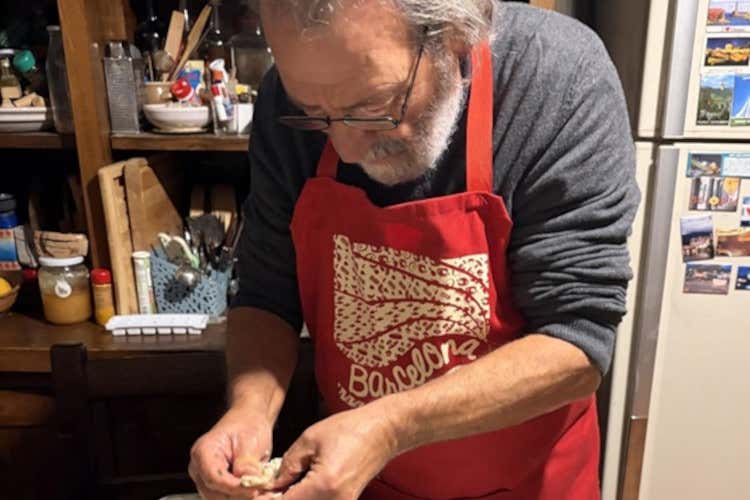
Rocco Petronio
A Dinner as a Story: Dishes, Wines, and Memories
The kitchen was entirely dedicated to valorizing neglected fish, drawing on the gastronomic experiences of the grandmothers of Catania fishermen translated into an accessible and coherent proposal. Rocco says: «The doyen of the fishermen of “Gente di mare” was “u zu Matteo”». The experience ended in December 2021 due to organizational and administrative difficulties. However, a living trace remains: periodically Rocco Petronio organizes, in private form, dinners dedicated to neglected fish for a few friends renewing a gastronomic memory made up of flavours, stories, and gestures handed down by fishermen’s families.
Rediscovering Forgotten Species through Culinary Experience
It also happened on December 13th. Among the diners, Michele Scammacca and Vincenzo Trigona, who took care of the wines. We started with the vintage Brut Metodo Classico Maria Elena 2020 from the Azienda Agricola Vincenzo Trigona: fine and persistent perlage, aromas of dried fruit and citrus, acidic and vibrant taste, good flavor and a delicate finish. At the opening, crostini with artisan butter from fresh milk, anchovies “from maggia” and caper tops: a balance between the two fattinesses, softened by the vegetal freshness of the tops harvested in May.
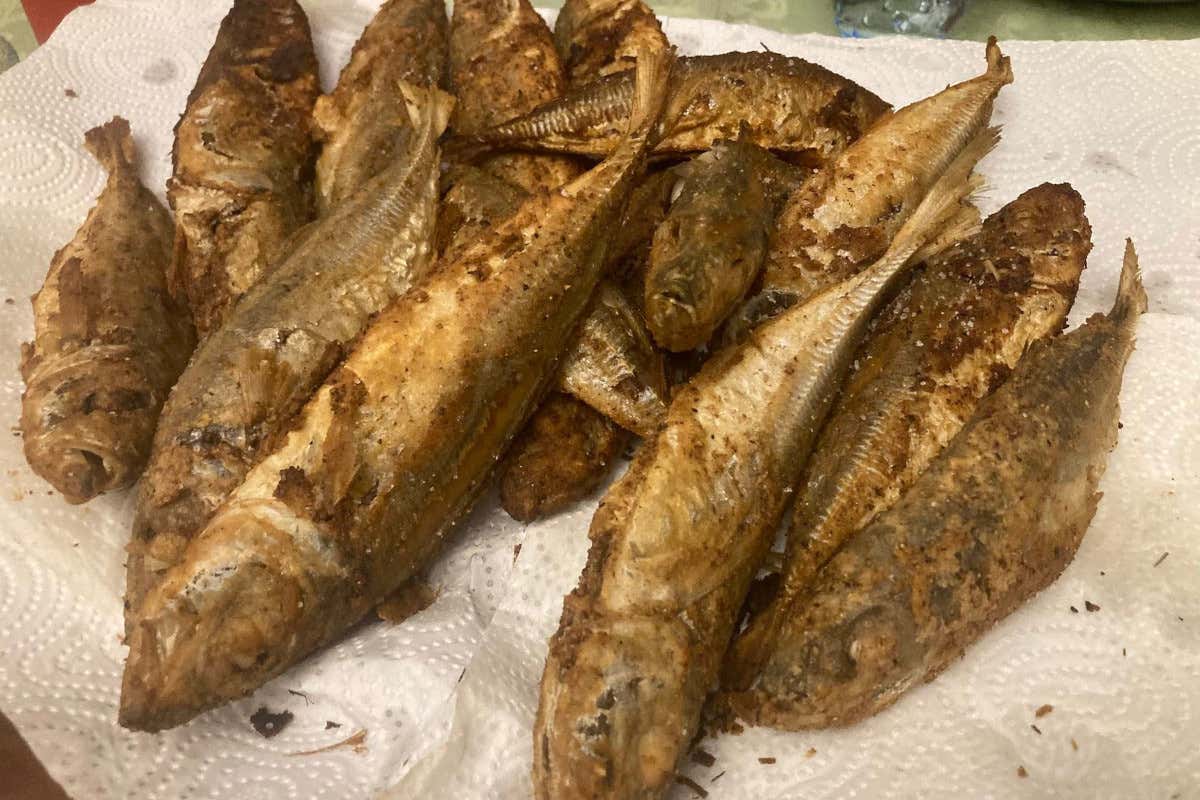
The sauri (sugarelli) floured and fried
Celebrating Forgotten Fish with Every Dish
The second glass was the Extra Brut Metodo Classico Vittoria 2021 vintage from the same company: more consistent bubbles, aromas of honey and citrus fruits, solid structure, marked flavor and long persistence. In accompaniment, speed (sugars) floured and fried, fish considered an indicator of water quality, rich in omega-3 and deeply linked to Sicilian food memory: in the 1950s it was preserved in oil or salt for annual consumption. To follow, curls “Mallard” – or sauro amberjack – also floured and fried: a fish often confused with amberjack, but smaller, with a rougher lateral line and distinctive sound characteristics.
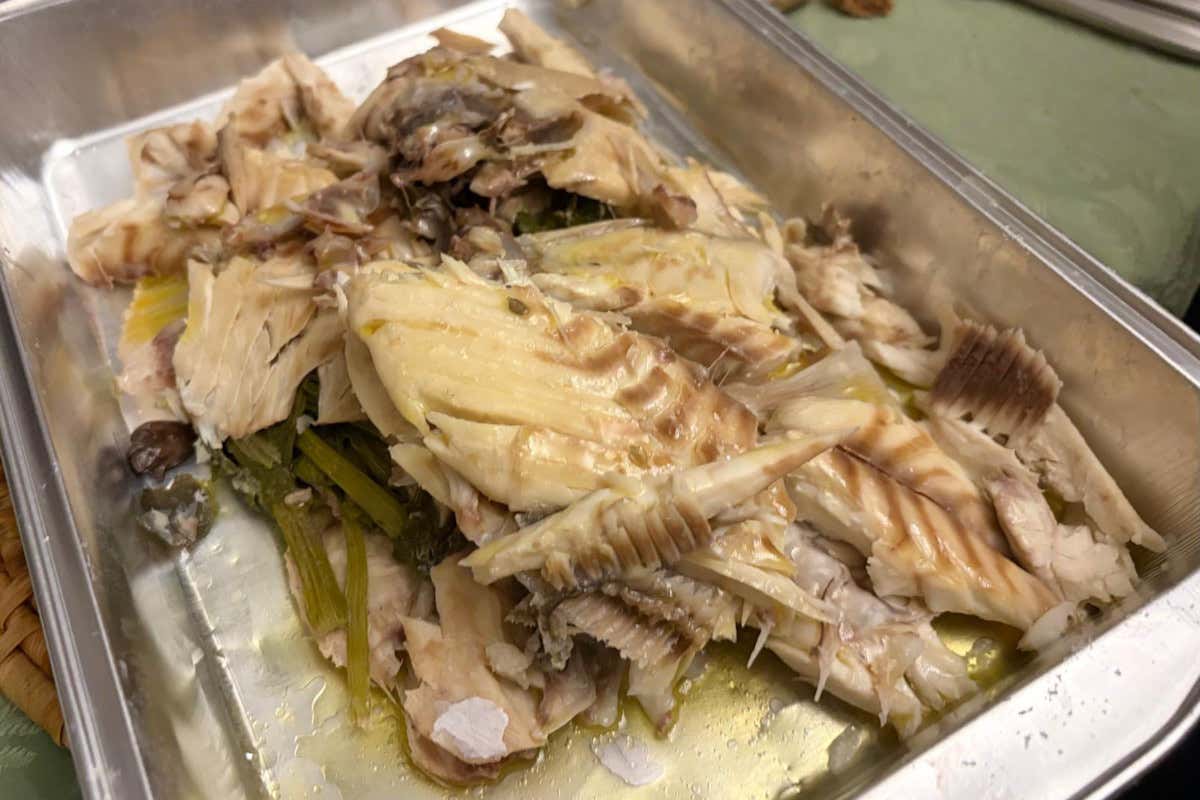
Salted pork fish (trigger).
Preserving Cultural Heritage through Neglected Fish
Forgotten species today represent a food and economic resource that cannot be overlooked in a time of crisis in the fishing sector. But they are also a cultural and ethno-gastronomic heritage to be enhanced in blue tourism and in recovering the identity of Sicilian fishing, in line with LR 9/2019, which promotes the protection of marine environments, traditional products, typical food and wine, the cultural traditions of fishing, seaside villages, and the coastal landscape.
Learn more about this initiative and the importance of preserving our marine heritage Here