



Reevaluating the Concept of “Italian Restaurants” Abroad
The notion that a made-in-Italy restaurant abroad can only succeed by renouncing the generic label of “Italian” and instead embracing a clear regional identity is a consideration worth exploring. This idea stems from the direct experience of entrepreneurs who have ventured to bring authentic regional Italian cuisine to the heart of foreign cities, such as Massimo Mori, owner of the Mori Venice Bar in Paris. Mori’s approach emphasizes the importance of focusing on the quality of regional raw materials and their valorization, rather than relying on generic Italian dishes or special effects.
Bringing Regional Italian Cuisine to the Forefront
Mori’s experience in Paris highlights the potential of showcasing regional Italian cuisine as a means to differentiate and succeed in a competitive market. By offering dishes that are deeply rooted in the traditions of specific Italian regions, such as the Veneto, Mori Venice Bar provides a unique and authentic culinary experience that sets it apart from generic “Italian” restaurants. This approach not only enhances the perception of Italian cuisine abroad but also contributes to its diversification and richness.
Massimo Mori, owner of the Mori Venice Bar in Paris
The Pitfalls of Generic “Italian” Restaurants
The proliferation of generic “Italian” restaurants abroad, often managed by individuals with little knowledge of authentic Italian cuisine, has led to a dilution of the country’s gastronomic image. These establishments typically offer a limited and stereotypical range of dishes, such as carbonara, cacio e pepe, and pizza, prepared with low-quality ingredients and lacking the cultural context and tradition that underpin true Italian cuisine. This phenomenon not only misrepresents Italian food culture but also undermines the efforts of those who strive to promote authentic regional Italian cuisine abroad.

In foreign tourist resorts, especially seaside ones, Italy is reduced to photocopy menus without an identity
A New Path Forward: Emphasizing Regional Identity and Quality
The experience of Massimo Mori and the Mori Venice Bar in Paris demonstrates that there is an alternative to the generic “Italian” restaurant model. By focusing on regional cuisine, using high-quality, seasonal ingredients, and showcasing traditional dishes in an authentic and innovative way, it is possible to create a unique and compelling culinary experience that enhances the perception of Italian cuisine abroad. This approach requires a deep understanding of Italian culinary traditions and a commitment to quality and authenticity, but it offers a path forward for those who wish to promote the true richness and diversity of Italian food culture.
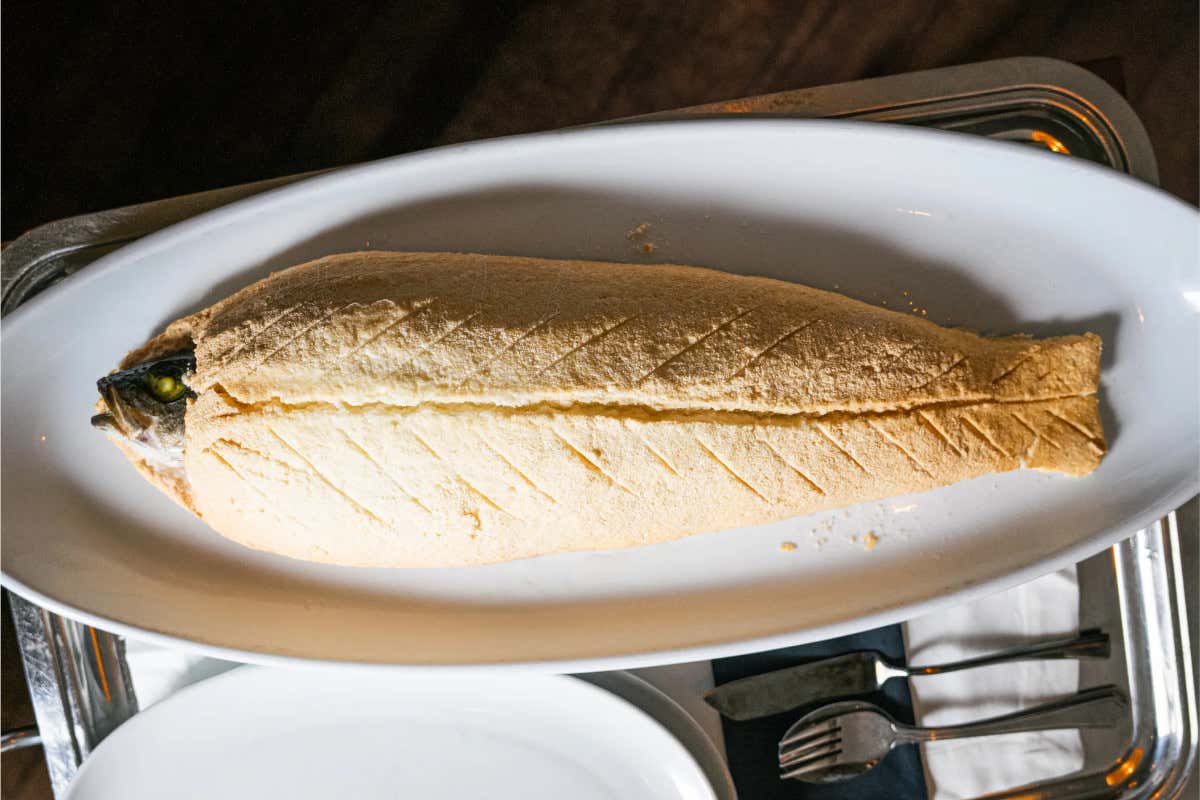
The salted sea bass from the Mori Venice Bar restaurant
Conclusion: Rethinking the Future of Italian Cuisine Abroad
The success of regional Italian cuisine abroad, as exemplified by the Mori Venice Bar in Paris, suggests that the traditional model of generic “Italian” restaurants may no longer be the most effective way to promote Italian food culture. By embracing regional identity, emphasizing quality and authenticity, and showcasing the diversity and richness of Italian culinary traditions, it is possible to create a new and compelling narrative for Italian cuisine abroad. This approach requires a collective effort from restaurateurs, entrepreneurs, and institutions to promote a more nuanced and accurate representation of Italian food culture, one that celebrates its regional diversity and culinary excellence. For more information, visit Here