



Discovering Rome through the Lens of Federico Fellini
Rome, the Eternal City, has been the backdrop for numerous iconic films, and one director who left an indelible mark on the city’s cinematic landscape is Federico Fellini. Born in Rimini in 1920 and passing away in Rome in 1993, Fellini’s films often showcased the city’s grandeur, beauty, and complexity. In this article, we will delve into the Rome sites most associated with the great film director, exploring the landmarks that played a central role in his movies.
Trevi Fountain: A Symbol of La Dolce Vita
The Trevi Fountain is undoubtedly the landmark most readily associated with Fellini, thanks to its starring role in La Dolce Vita (1960). The film’s most famous scene features Swedish actress Anita Ekberg wading into the fountain’s waters, seducing Marcello Mastroianni to join her. This iconic scene has become synonymous with the film and the city of Rome. When Mastroianni passed away in 1996, the city turned off the fountain’s waters and draped the monument in black, while Ekberg’s passing in 2015 was marked with a giant banner reading “Ciao Anita” hung over the fountain.
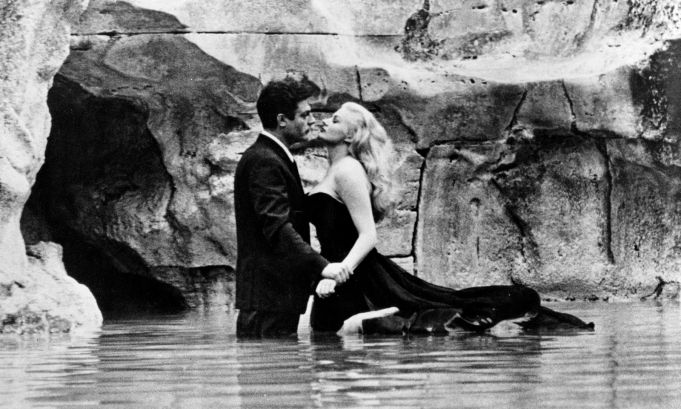 The Trevi Fountain scene from La Dolce Vita
Via Veneto: The Epicenter of La Dolce Vita
Via Veneto, a street synonymous with Rome’s glamorous dolce vita era of the 1950s, was a hub for foreign film stars, attracting hordes of paparazzi. Fellini dramatized this phenomenon in La Dolce Vita, using Via Veneto as the backdrop for the film’s exploration of Rome’s high society. The director also featured Via Veneto in The Nights of Cabiria (1957), starring his wife Giulietta Masina as a prostitute searching for true love in the city.
Exploring Other Fellini Landmarks in Rome
Fellini’s films often featured iconic Roman landmarks, including the Colosseum, which appeared in The White Sheik (1952) and Roma (1972). The Spanish Steps made a spectacular backdrop in Lo Sceicco Bianco, while the EUR district, with its rationalist architecture, featured in La Dolce Vita and Boccaccio ’70 (1962). Other notable landmarks include St Peter’s, which opened La Dolce Vita with a panoramic perspective, and Via Margutta, where Fellini lived and regularly visited the Canova café in nearby Piazza del Popolo.
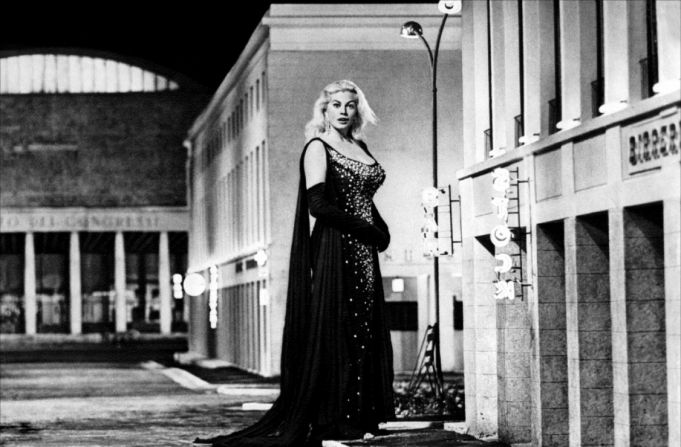 Anita Ekberg in Boccaccio ’70 in EUR
More Hidden Gems and Famous Landmarks
Additional landmarks that appeared in Fellini’s films include Termini Station, which featured in several movies, including Lo Sceicco Bianco and Roma; the Baths of Caracalla, which appeared in Le Notte di Cabiria and La Dolce Vita; and the Mausoleum of Cecilia Metella, which was featured in Roma. The seaside town of Fregene, where Fellini owned a villa, was the setting for the final scene of La Dolce Vita and also appeared in Lo Sceicco Bianco and Juliet of the Spirits (1965). Lastly, the Cinecittà film studios, where Fellini shot most of his movies, recently opened a museum dedicated to Italian cinema, paying tribute to the director’s legacy.
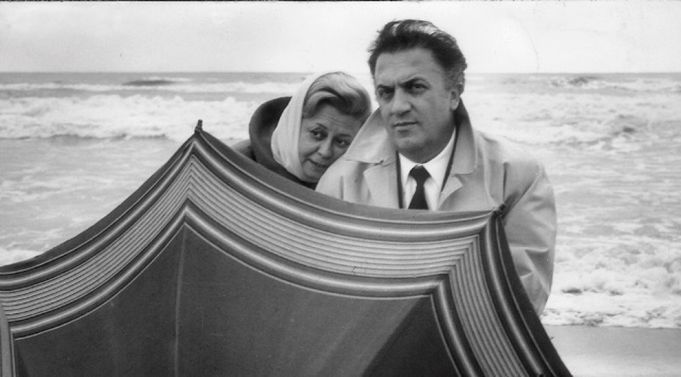 Giulietta Masina and Federico Fellini at Fregene
For a deeper dive into Fellini’s Rome, visit Here