



Is pasta the preserver of wheat? Is olive preserve oil? Is the vine preserve wine? So, we can also say that Is cheese the preserve of milk? Come on, let’s tell it like this, we like it! The notion that cheese is a preservation method for milk is an interesting concept. Cheese has been a staple in many cultures for centuries, and its preservation properties have allowed it to be enjoyed for extended periods.
Introduction to Italian PDO and PGI Cheeses
Italy is renowned for its rich culinary heritage, and cheese plays a significant role in this tradition. With 56 cheeses bearing a geographical indication, Italy boasts an impressive array of PDO (Protected Designation of Origin) and PGI (Protected Geographical Indication) cheeses. Among these, 53 are PDO, and 3 are PGI, excluding the single TSG (Traditional Speciality Guaranteed) designation. This article delves into the world of Italian cheeses, exploring their production, consumption, and export values, as well as the types and characteristics that make them unique.
The Numbers Behind Italian PDO and PGI Cheeses
Delving into the data, we find that the 56 Italian PDO and PGI cheeses can be analyzed based on four key quantities: production, production value, consumption value, and export value. Production is expressed in tons, while the other three values are represented in euros. By examining these numbers, we can gain insight into the significance of each cheese within the Italian dairy system. Interestingly, just 8 cheeses out of the 56 account for a substantial portion of the overall production, production value, consumption value, and export value.
The most common type of cheese is the mature one
The Eight Protagonists of the PDO System
The first 8 cheeses, all DOP, are Grana Padano, Parmigiano Reggiano, Mozzarella di Bufala Campana, Gorgonzola, Pecorino Romano, Asiago, Taleggio, and Provolone Valpadana. These cheeses alone account for 94% of the overall production, with 551 thousand tons out of 583 thousand; 94% of the production value, equal to 5.5 billion out of 6; 94% of the consumer value, 9.4 billion out of 10, and as much as 98% of the export value. This dominance is a testament to the significance of these cheeses within the Italian dairy industry.
Types, Fresh, and the Concept of “Less is More”
Upon closer examination, we find that there are approximately a dozen types of cheese, with the seasoned type being the most prevalent. However, when considering the concept of “less is more,” we discover that the fresh type is the least frequent, with only 6 cheeses belonging to this category. These cheeses are Burrata di Andria PGI, Casatella Trevigiana PDO, Mozzarella di Bufala Campana PDO, Mozzarella di Gioia del Colle PDO, Squacquerone di Romagna PDO, and Vastedda del Belìce PDO.
Milk: Single Origin, Mixed, and Unique
In terms of milk, we find that the majority of cheeses (51) are made from a single type of milk, while only 5 are made from mixed milk. The least present milk is buffalo milk, which contributes entirely to the production of just one PDO cheese, Mozzarella di Bufala Campana PDO.
The Smallest PDO in Italy
Lastly, we look at the production area of each cheese and find that Castelmagno Dop has the smallest production area, limited to only three municipalities in the province of Cuneo: Castelmagno, Monterosso Grana, and Pradleves. This uniqueness is a testament to the diversity and richness of Italian cheeses.
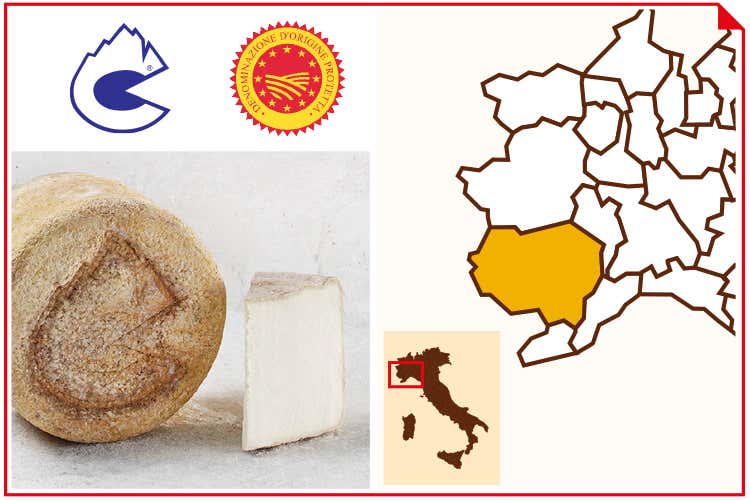
Castelmagno, the smallest Italian PDO
We have more DOP cheeses than weeks in the year, and that’s just fine! This abundance of cheeses is a reflection of Italy’s rich culinary heritage and its people’s passion for preserving traditional methods and flavors. For more information on the fascinating world of Italian cheeses, visit Here