



Introduction to Trippa, a Restaurant in Milan
In Milan, there is a restaurant that has taken a bold step by closing on weekends, yet it has recorded the best gross ever. This may seem like a paradox, but it is actually the result of a well-thought-out project, a reorganized system, and a clear idea of work and public. Diego Rossi, the chef and owner of Trippa in Milan, a project he created with Pietro Caroli, shares his insights on the main issues affecting contemporary catering today. From not chasing the market to cost management, from the transformation of the public to the critical issues linked to the UNESCO candidacy of Italian cuisine, a vision emerges that puts design coherence, cultural diversity, and awareness of the change underway at the center.
Diego Rossi, chef of Trippa
Competition and New Openings: A Contextual Factor, Not a Strategic Lever
Rossi places Trippa outside the most obvious competitive dynamics of the Milanese panorama. In a city marked by a high density of venues and continuous new openings, the restaurant has never built its identity according to the context. «We never looked too much at what was happening around us», explains Rossi. «The idea was to have our own imprint and follow it». The growth of the place occurred progressively and without significant fluctuations. New openings are not interpreted as a threat, but as a physiological element of the urban system: «Milan has a very large audience», he observes, «and it needs different restaurants. Diversity is necessary, like biodiversity in nature». However, not chasing the market is not a strategy for everyone. It only works if the identity is very clear and sustained over time, with coherence and continuity in the offer and communication.
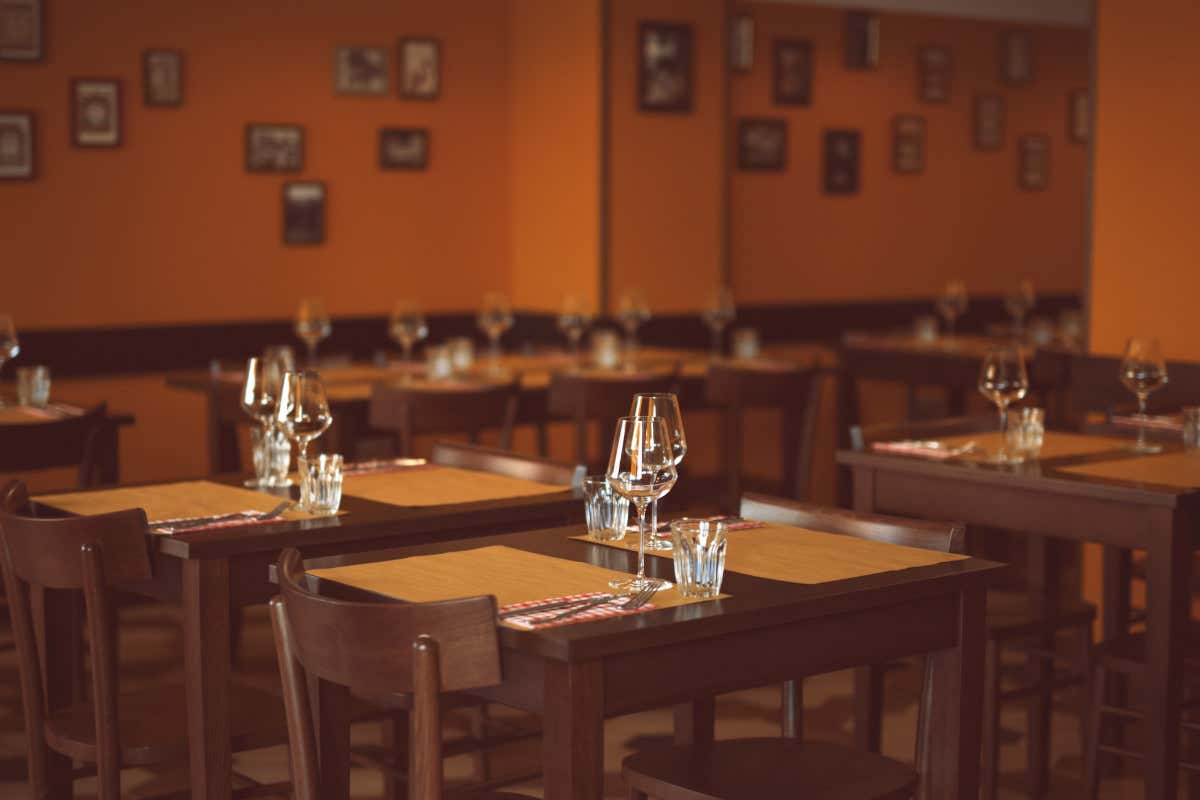
Tripe: the room
Management Costs: Taxation as a Structural Node
If Milanese operating costs – rent, logistics, services – are notoriously high, Rossi identifies taxation as the real critical point. «With a tax burden between 47 and 50% it is like having another partner», he states, underlining how this factor directly affects the sustainability of companies. The fiscal pressure, rather than the city context, therefore becomes the element that limits the ability to plan investments and consolidate projects over time. Taxation becomes a sort of Darwinian selection: those who resist are not necessarily the best, but the most capitalized, who is best able to bear the burden of costs and invest in agencies and marketing to maintain visibility and customers.
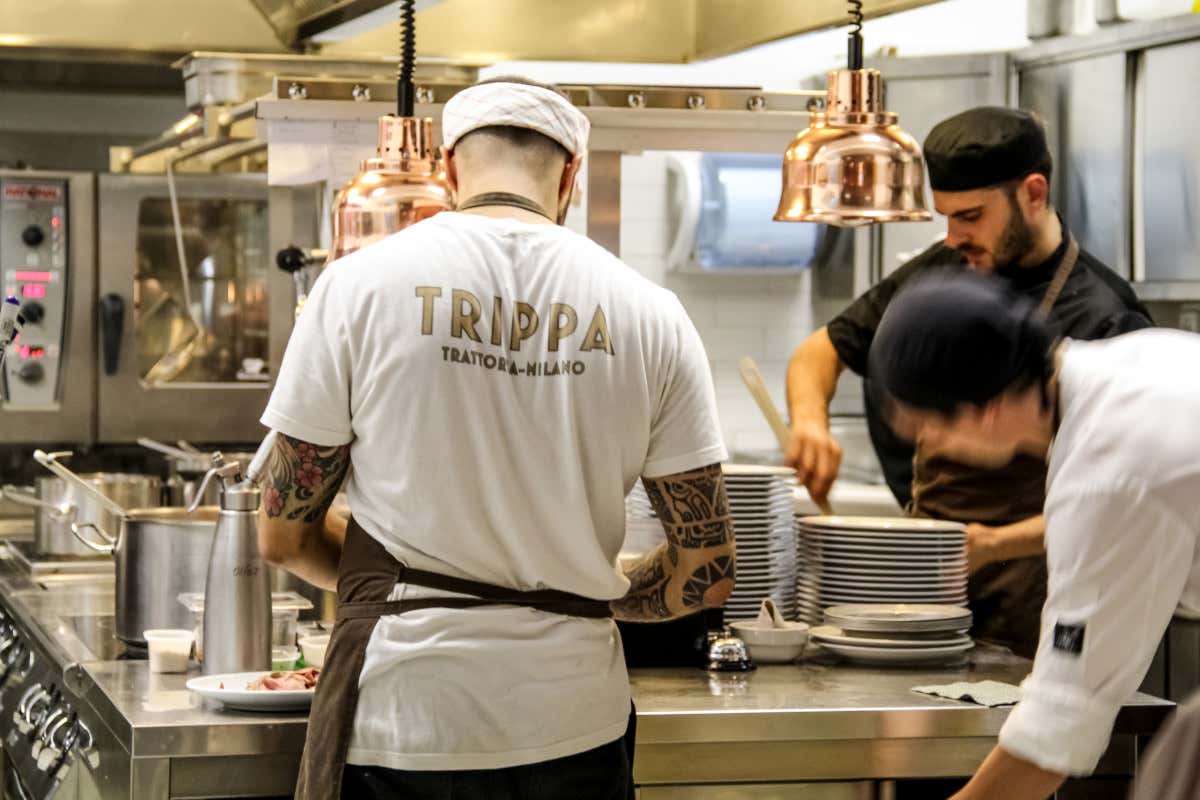
Kitchen work is hard
Work in the Kitchen: A Cultural Crisis Before an Economic One
On the topic of staff shortages, Rossi shifts the discussion from the economic to the cultural level. The difficulty in finding qualified workers is seen as the result of an altered perception of the profession: «After Covid many have understood that this is not MasterChef», he observes, «but hard work». According to Rossi, the distance between media narrative and everyday reality has contributed to generating unrealistic expectations, making a path that requires time, sacrifice, and training less attractive.
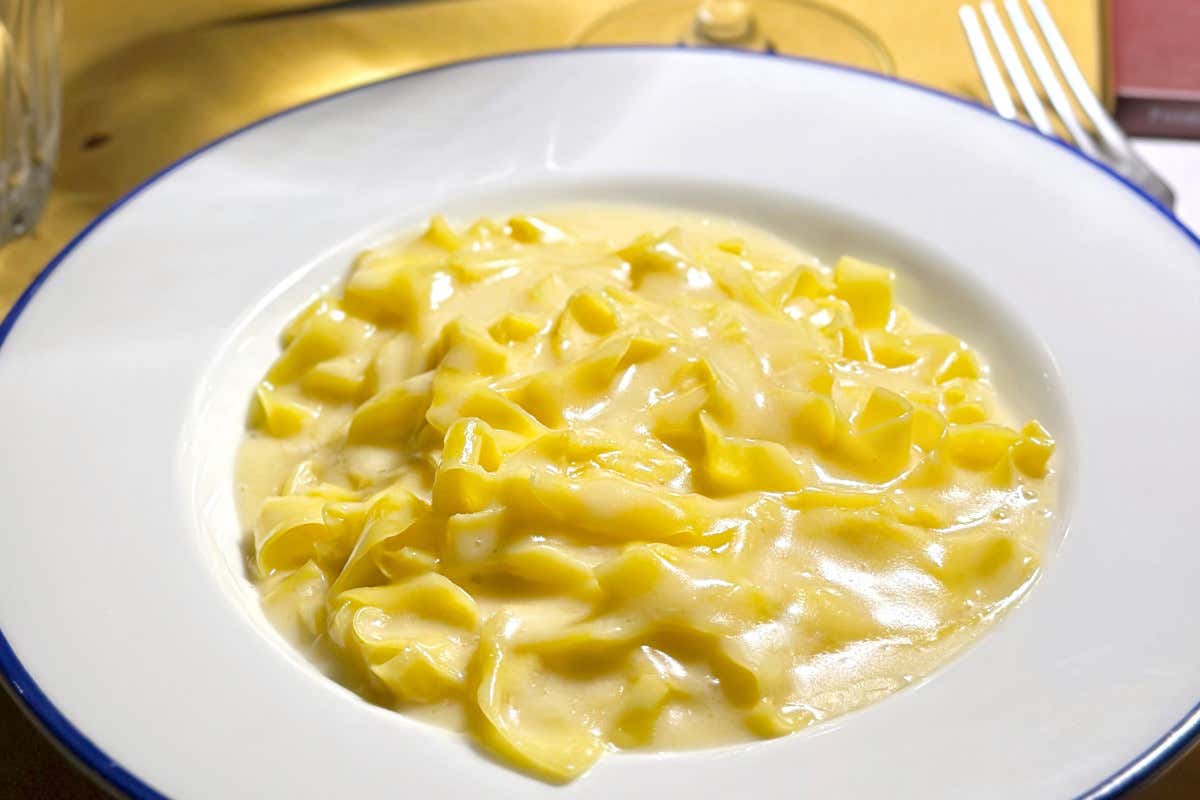
Tripe: Tagliatelle with butter and parmesan
Social Media and the Public: Visibility That Orients, but Does Not Deepen
The relationship with social media emerges as one of the most critical points of the interview. Rossi recognizes its usefulness in terms of exposure, but underlines its distorting effects: «In the end they were more harmful than useful». The problem is not the attention itself, but the way in which it guides customers’ choices: «People choose what they saw online», explains. «We almost only sell tagliatelle with butter and parmesan because they have seen them on social media». This mechanism has broadened the audience, but has changed its profile: «First came an audience more interested in Trippa’s thoughts», adds Rossi. «Today it is a shallower audience».
Trippa’s Identity: A Coherent Evolution
Trippa was born as a project strongly linked to the fifth quarter and off-papers. Over time, the identity has evolved gradually, without ruptures. The menu was structured maintaining an apparent simplicity, but increasing the planning complexity, with an increasing centrality of vegetables. Some dishes have remained unchanged over the years, becoming elements of continuity: fried tripe, tagliatelle with butter, veal with tuna sauce and panna cotta. Preparations that today represent a point of balance and a clear direction.
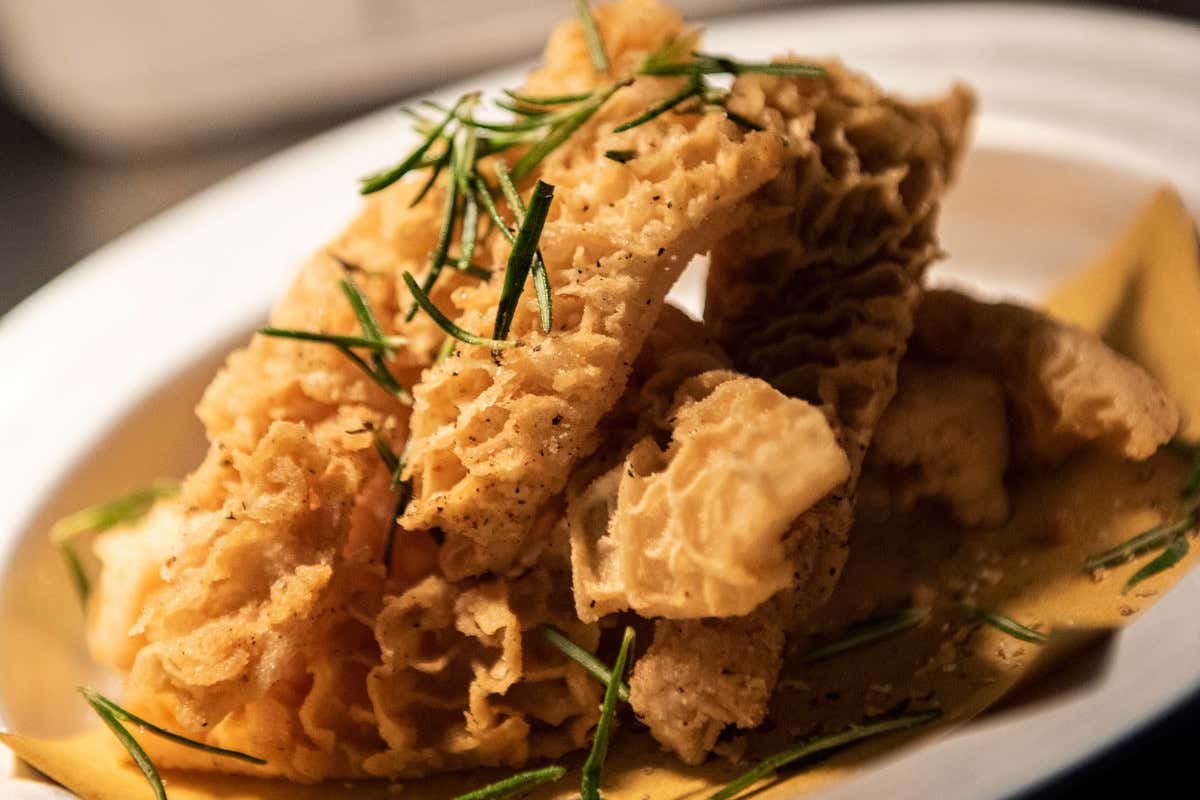
Tripe: Fried tripe
Work Organisation: Rethinking the Weekend
The decision to close on Saturday, compensated by opening on Friday for lunch, is described as a management choice. The economic results were immediate: «In the first month we made the highest gross ever». But the most relevant data concerns the organization of work: «Having two consecutive days of rest changes everything», underlines Rossi, highlighting the positive impact on the well-being of the staff and the stability of the group.
Customers, Information, and Expectations
A reflection on the change of the public also emerges in the dialogue. The constant attention towards catering has made customers more informed, but also more demanding: «There is a rush for reservations, a fight for seats», observes Rossi. An often fragmented knowledge that leads some clients to want to demonstrate skills that are not always consolidated: «They want to show what they know», he adds, «even when this is not the case».
Technology and Relationships: Efficiency Without Proximity
Digital booking systems have improved organizational efficiency, but have made the relationship with the customer more impersonal. «The access problem would still remain», underlines Rossi, especially in small venues with very high demand. Technology, therefore, resolves operational issues but does not intervene on the structural issue of seat availability.
Italian Cuisine and UNESCO: The Risk of Simplification
On the topic of the candidacy of Italian cuisine as a UNESCO heritage site, Rossi expresses a clear and articulated position: «There is no codified Italian cuisine», he states. «There are regional, municipal and family cuisines». More than a unitary kitchen, Rossi talks about a style: «There is an Italian style of sitting at the table and seeing the kitchen», it needs, «but not absolute Italian cuisine». The risk, he concludes, is that standardization ends up weakening that very thing gastronomic diversity which represents the true cultural value to be protected.
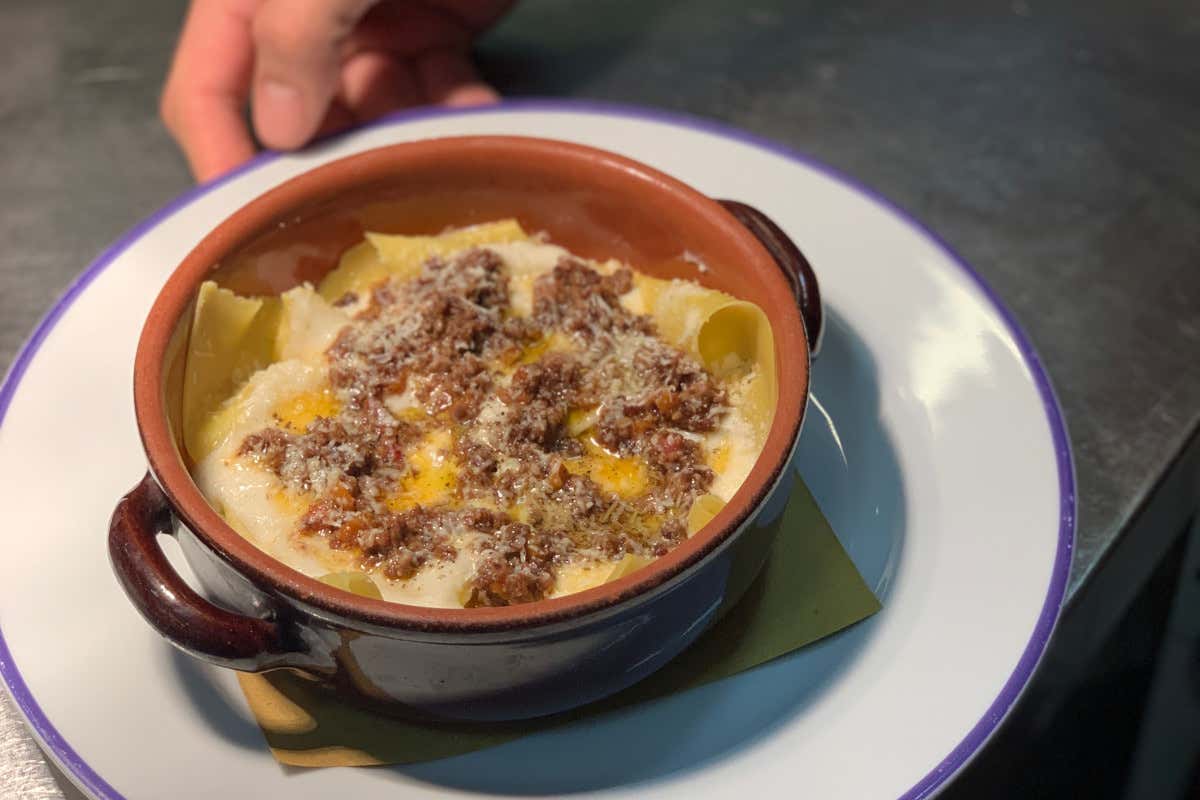
Tripe: Lasagna
Conclusion
From the dynamics of the urban market to the transformations of the public, up to the debate on the national gastronomic identity, Rossi’s words give the picture of a restaurant called to rethink models, languages, and priorities. For him, the challenge is not to adapt to every trend, but to maintain a clear direction, defending the diversity of cuisines, the value of work, and a relationship with the customer that goes beyond visibility. An approach that, over time, continues