



US Reduces Anti-Dumping Duties on Italian Pasta: A Positive Development for Exports
The United States has revised its hypothetical anti-dumping duties on Italian pasta downwards, alleviating concerns for a strategic sector in national agri-food exports. This decision comes as a welcome relief for Italian pasta manufacturers, who were facing potential duties of up to 91.74% on their exports to the US. The revised rates, ranging from 2.26% to 13.98%, are significantly lower than initially anticipated, and are expected to have a positive impact on the competitiveness of Italian companies in the American market.
The Anti-Dumping Investigation and Initial Fears for Exports
The US Department of Commerce had launched an anti-dumping investigation into imports of Italian pasta, which led to speculation about potential duties that could have added to the existing 15% tariff on most European products. This would have resulted in an overall tariff of over 100%, significantly impacting consumer prices and the competitiveness of Italian companies in the US market. The risk of drastically reduced exports was real, and companies were considering alternative strategies, such as strengthening their organic segment, localizing production in the US, or engaging in a legal battle.
The United States has reduced anti-dumping duty rates on Italian pasta
The US Review and Revised Rates
The US authorities released a post-preliminary analysis, which revised the duty rates downwards. The new rates, ranging from 2.26% to 13.98%, are significantly lower than initially anticipated. This decision is seen as a recognition of the collaboration and transparency demonstrated by Italian companies during the investigation. The Italian Minister of Agriculture, Food Sovereignty and Forestry, Francesco Lollobrigida, welcomed the decision, stating that “serious work, without unnecessary alarmism, bears fruit.” The reduction in rates is expected to have a positive impact on the export of Italian pasta to the US, which reached 671 million euros in 2024.
The Role of the Italian Food Union and the Supply Chain
Margherita Mastromauro, president of the pasta makers of the Italian Food Union, expressed satisfaction with the revised rates, stating that the outcome confirms the central role of representative associations in protecting the competitiveness of Made in Italy. The Italian Food Union worked closely with associated companies, including La Molisana, Garofalo, and Barilla, to navigate the complex and delicate process. The collaboration with the Foreign Minister Antonio Tajani and the European Commissioner Maroš Šefcovic was also instrumental in achieving this positive outcome.
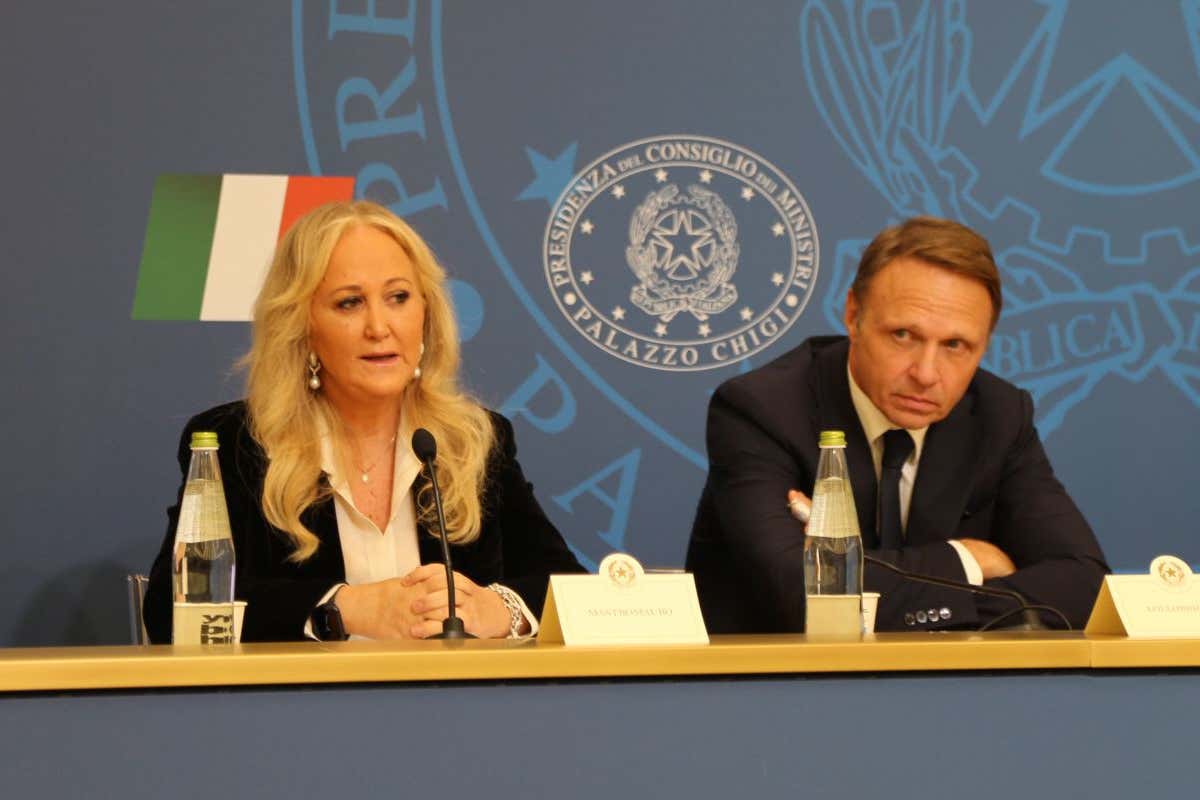
The president of the Italian Food Union Margherita Mastromauro (left) with the Minister of Agriculture Francesco Lollobrigida
What Changes Now for Italian Pasta in the United States
While the anti-dumping procedure is not yet complete, the revised rates mark an important step in the comparison between Italy and the US on the protection of quality agri-food production. The reduction in rates alleviates concerns about the potential impact on Italian exports, and companies can continue to control the strategic US market without having to immediately overhaul their production and commercial models. For more information, read the full article Here